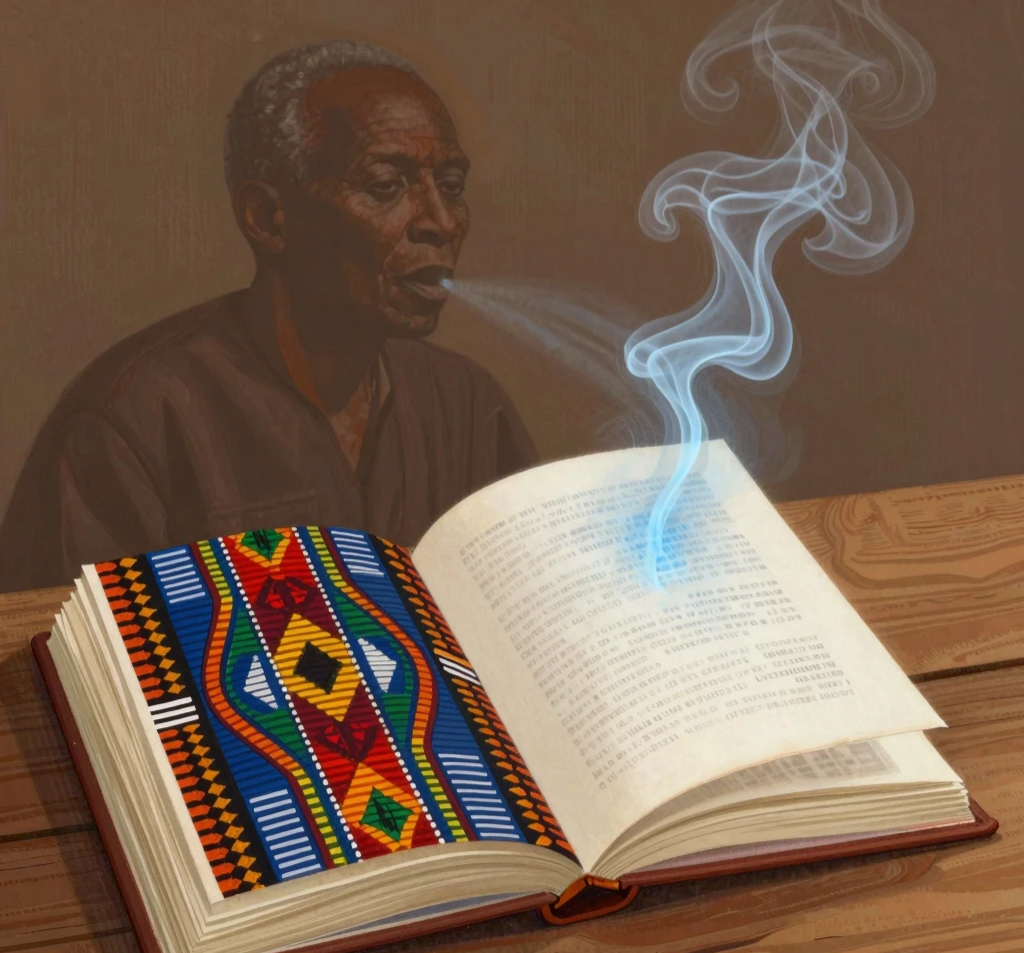
When a book disappears, it doesn’t make a sound. There is no funeral, no trending hashtag, no global moment of silence. It simply goes out of print, falls off syllabuses, fades from recommendation lists, and one day a generation grows up never knowing it existed. The author is still alive. The culture that produced it is still struggling. But the story has been quietly erased.
We can't say its bad luck, it's not just “taste.” It’s a map of power.
Because the books you are taught to see as “great literature” are not the only great books that were written. They are the books that survived war, censorship, funding decisions, colonial education policies, publisher priorities, and the attention span of a distracted, algorithm-driven world. And once you realize that, you can’t keep reading the same way again.
The Canon is not Neutral.
Let’s start with a hard truth, the “literary canon” is not a list handed down by God. It’s a playlist curated by people with power.
For decades, what counted as “World Literature” in schools around the globe was basically:
- Shakespeare and a few English poets
- One or two Russian novels
- Maybe a French classic
- Then, if the syllabus was feeling generous, one African or Caribbean text shoved into a single term
It’s not that those works are bad. The problem is what their dominance quietly implies.
That other stories, written in other languages, from other histories, are secondary, optional, or “special interest.”
African writers have been pointing this out for years. But their complaints are often treated like noise instead of diagnosis. It’s easier for institutions to sprinkle in one Chinua Achebe or Wole Soyinka and pretend the problem is solved than to ask the uncomfortable question, Who did we erase to make space for this “standard” reading list?
Erasure isn’t always Loud. Sometimes, it’s just silence.
When we talk about censorship, people imagine governments banning books, burning libraries, or jailing authors. That still happens in some places. But most literary erasure now is quieter, more polite.
It looks like:
- A novel by a Black or African woman quietly going out of print while her male peers stay available.
- A pioneering queer African text never being reissued, so only academics in foreign universities know it exists.
- Oral stories that never get written down because publishers assume they won’t sell.
- Local-language works ignored because “the market prefers English.”
Nobody announces, “We are erasing this.” They simply don’t fund it, don’t reprint it, don’t market it, don’t translate it, don’t recommend it to schools. Over time, what isn’t fed dies.
And this is how a whole continent’s complexity can be reduced to twenty “representative” books on a global reading list.
Colonial Ghosts on your Bookshelf.
You cannot talk about literary erasure in Africa without talking about colonialism. The school systems that many countries still use were designed, originally, to produce colonial subjects, not free minds.
That meant:
- African languages were treated as inferior or “informal.”
- European texts were presented as the model for what “proper literature” looks like.
- Oral traditions were dismissed as primitive, not “serious” art.
So even after political independence, the mental infrastructure remained. Ministries of Education kept the same exam patterns. Teachers who were trained on British texts taught their students the same thing. Publishers invested in books that matched those curricula. And slowly, the idea of what counts as “good literature” narrowed to whatever resembled the old colonial syllabus.
The result? Generations of African students grew up reading more about English countryside villages than their own hometowns. They learned to analyze metaphors in poems about snow they’ve never touched, while never seeing their streets, gods, or slang captured with the same respect.
That is not an accident. That is erasure.
The fragility of Oral stories.
Now think about all the stories that never even made it to print.
Before paper, a lot of African literature was oral. Praise poetry, epics, folktales, songs, chants. These weren’t “just stories to pass time.” They carried history, law, ethics, memory. Archives encoded in performance.
Then colonization happened. Mission schools arrived. Urbanization broke extended family structures. Children started spending more time in classrooms than in evening story circles. Suddenly:
- Grandparents weren’t the main teachers of culture anymore.
- New “important” texts were imported, and local ones were framed as backward.
- If your story wasn’t in a book, exam, or library, it didn’t “count.”
Some oral traditions survived, many didn’t. Others live on in fragments. Proverbs without context, half-remembered tales, names with meanings nobody can fully explain anymore.
In other words, some literature was erased before it was ever written.
Who gets Remembered, who gets Forgotten.
Even among published authors, not everyone gets the same shot at survival.
Two writers might produce equally brilliant work. But the one who is,
- translated into European languages,
- reviewed in Western newspapers,
- taught in foreign universities,
- archived in well-funded libraries
…has a much better chance of staying visible over decades than the one whose books were printed cheaply, never reissued, and stored in a local library that later lost funding.
Sometimes, the difference is,
- Gender: women’s stories getting treated as “domestic” or “minor,” then quietly ignored.
- Class: writers without connections never finding publishers with reach.
- Politics: books that challenge power structures being starved of distribution rather than openly banned.
And once a book is out of print long enough, it falls into a shadow zone. Too old to be “new,” too obscure to be considered a “classic.” That’s how erasure works, not by one big act of violence, but by a thousand small acts of neglect.
Algorithms are the New Gatekeepers.
You would think the internet fixed all this. After all, you can “discover” anything, right?
Not really.
Streaming platforms, online bookstores, and social media feeds are all optimized for engagement and sales. Their job is not to protect fragile books from the past. Their job is to keep you scrolling and buying.
That means:
- You see what other people are already talking about.
- You get recommended what sells fast, not what risks being forgotten.
- Viral “BookTok” and “Bookstagram” trends reward the same small circle of heavily marketed titles.
The more an author is already famous, the more the algorithm boosts them. The more niche, local, or out-of-print a work is, the deeper it sinks. The machine doesn’t hate those books; it simply doesn’t see them as profitable or “relevant.”
So the old problem of erasure now has a digital partner, if a book isn’t optimized for the algorithm, it might as well not exist.
Why this matters for you as a Reader.
You might ask, “Okay, but how does any of this affect me personally? I just want good stories.”
It affects you because your picture of the world is built from the stories you consume.
If the only African narratives you see are:
- war, poverty, or trauma,
- a single “classic” text from the 1960s,
- or one trendy contemporary novel picked by Western prize committees,
then your understanding of your own continent’s imagination will be artificially small.
You will start to believe:
- “We don’t write sci-fi like that.”
- “We don’t have complex fantasy worlds.”
- “Our love stories are not that deep.”
Not because those works don’t exist, but because they were never amplified, preserved, or put in front of you.
Erasure is not just about books disappearing. It’s about possibilities disappearing from your mind.
How you can fight Erasure from where you are.
You are not the Ministry of Education. You don’t run a publishing house. You are one reader. But one reader with intention is more powerful than you think.
You can:
- Dig deeper than the front table. When you visit a bookstore or online shop, go beyond what’s on the first page. Explore backlists, small presses, and local publishers.
- Ask for what isn’t there. When a school or library only offers the same old texts, ask, “Why don’t we have more African women writers? Why don’t we have any books in our local language?” That pressure matters.
- Document what you find. When you read an underrated or forgotten book, don’t keep quiet. Review it, share quotes, teach it to someone, use it in your content. Make digital footprints for it.
- Value oral stories. When older people tell stories, record (with their permission), write, or translate them. Turn that fragile spoken literature into something that can outlive phone batteries and memory.
- Resist lazy lists. When people ask for “African book recommendations” and you see the same three names repeated, add ten more. Expand the circle.
You can’t save every lost book. But you can stop pretending the few in your school notes are all that ever mattered.
Becoming a reader who Remembers.
The real shift is internal. You move from being a passive consumer of whatever the system hands you to a conscious participant in what gets remembered.
That means you stop saying:
- “If it was important, I’d have heard of it.”
And start saying:
- “If I haven’t heard of it, maybe that’s exactly why I should look.”
You start reading across:
- countries,
- genders,
- classes,
- languages,
- formats (print, oral, digital).
You become the kind of reader who notices absences, not just presences.
Because in the end, literature is not just about the stories that were written. It’s about which ones we decide to keep alive.
You may not be able to rewrite the canon today. But you can refuse to let your own reading life be a mirror of other people’s erasure. You can build a private canon that honors books the world forgot to protect.
Stories vanish when everyone assumes someone else will remember them.
Don’t assume.
Be the one who remembers.
💬 Join the Conversation (0) Comments
Join the discussion!
Sign in to post, like, and reply with a verified profile, or comment as a guest.
Or, comment as a Guest User (No likes/replies)Leave a Comment As