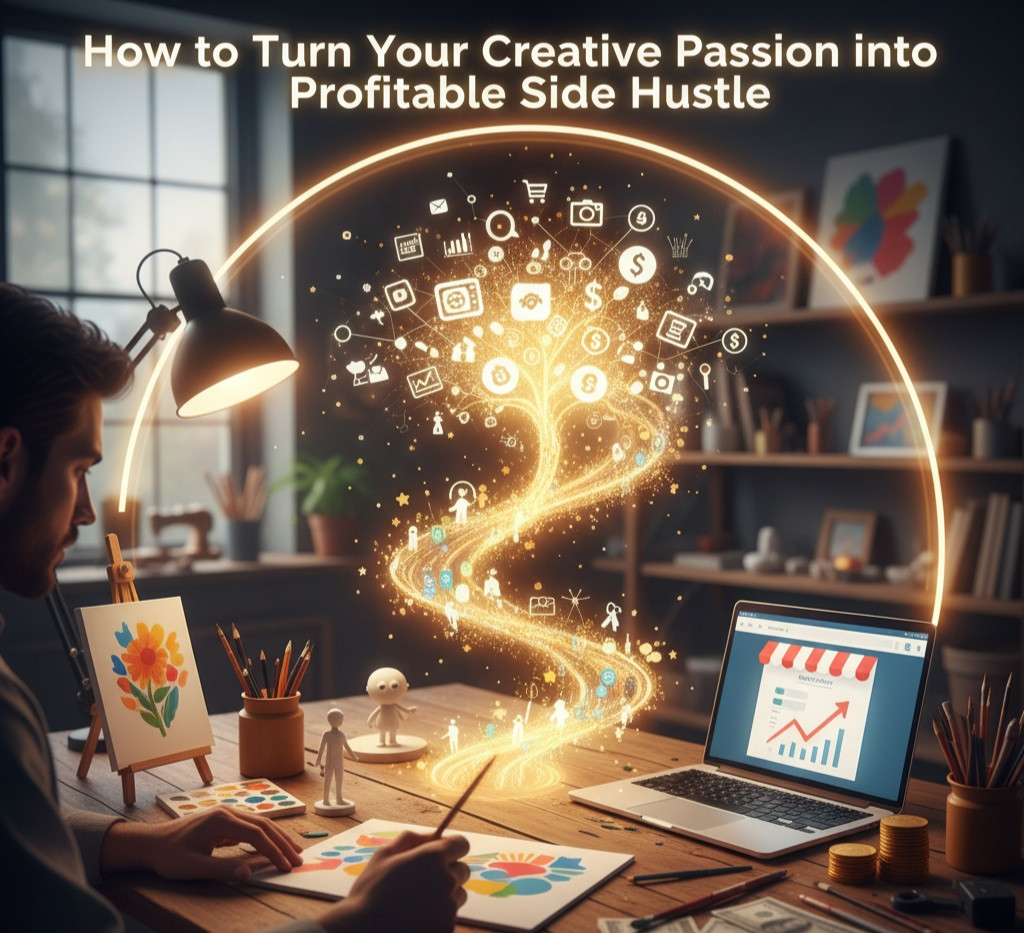
You love creating. Maybe you draw, write, design, paint, photograph, or make things with your hands. You do it because it feeds your soul, not because anyone pays you to do it.
But here's a thought that's probably crossed your mind more than once, what if you could actually make money doing this? Not quit your job money, not yet anyway. But real, consistent, pay-your-bills-or-fund-your-hobbies money.
The good news? You absolutely can. The better news? You don't need to be the best artist in the world, have a million followers, or know some secret formula. You just need to understand how creative skills translate into income, and then actually do the work.
I'm not going to lie to you and say it's effortless. Building a profitable side hustle takes time, strategy, and consistent effort. But if you're already creating anyway, why not get paid for it?
Let's turn that passion into profit.
From hobbyist to business owner
Before we talk tactics, let's talk about the mental block that stops most creatives from monetizing.
You probably think one or more of these things:
"My work isn't good enough to charge for."
Wrong.
There are people making six figures with skills worse than yours. Quality matters, but so does marketing, consistency, and just putting yourself out there.
"Nobody will pay for this."
They will. The market for creative work is massive and growing. From digital products to custom commissions to teaching others your skills, there are more ways than ever to monetize creativity.
"Charging for my art will ruin the joy of creating."
It might change it. But it also validates your work, gives you resources to create more, and lets you dedicate more time to your craft instead of grinding at a job you hate.
"I don't know anything about business."
Neither did anyone else when they started, you learn by doing.
Your art has value, your time has value, act like it.
Step 1: Figure out what you're actually selling
"I want to monetize my creativity" is too vague, you need to get specific.
What exactly are you offering? There are several categories, and you might fit into more than one.
Physical products
Original art, prints, handmade crafts, candles, jewelry, custom clothing, pottery, basically anything tangible you create with your hands.
Platforms: Etsy, your own website, local craft fairs, pop-up markets, instagram shops.
Digital products
Downloadable art prints, digital planners, templates. Social media, website, presentations. Fonts, brushes, presets, stock photos, ebooks, patterns.
Platforms: Etsy, gumroad, creative market, your own website.
Print-on-demand merch
Your designs on t-shirts, mugs, phone cases, tote bags, posters, stickers, etc. You design it, the platform prints and ships it.
Platforms: Redbubble, printify, printful, society6, gelato, teepublic.
Services and commissions
Custom illustrations, logo design, graphic design, web design, branding, pet portraits, wedding invitations, murals, photography sessions, voiceover work.
Platforms: Fiverr, upwork, 99designs, your own website, instagram DMs.
Education and Teaching
Online courses, workshops, tutorials, ebooks teaching your skills, one-on-one mentoring, live classes, YouTube tutorials.
Platforms: Teachable, skillshare, udemy, patreon, youtube, your own website, sellar, tuteria, eduteach.
Content creation
Youtube channel, podcast, blog, newsletter where you share your creative process, teach skills, review products, or build a community.
Monetization: Ad revenue, sponsorships, affiliate marketing, patreon, selling your own products to your audience.
Pick one or two to start, don't try to do everything at once. Master one revenue stream, then add others.
Step 2: Build your portfolio because nobody buys ehat they can't see
You need proof that you can do what you say you can do.
Your portfolio doesn't need to be fancy, but it needs to exist and be easy to find.
What to include:
Your best work. Not everything you've ever created. Just 10-20 pieces that showcase your range and skill.
Variety that shows what you can do. If you're a designer, show logos, social media graphics, posters. If you're an illustrator, show different styles and subjects.
Process shots or case studies. Show how you work, not just the final result. People love behind-the-scenes content.
Where to host your portfolio:
Free options: Instagram: essentially a visual portfolio, behance, dribbble, pinterest, artstation, a simple google drive folder with a shareable link.
Paid/professional options: Your own website using wordpress, wix, squarespace, or hostinger website builder AI-powered, super easy.
Pro tip: Use a custom domain even for free platforms. "yourname.com" looks way more professional than "yourname23847.wixsite.com"
If you don't have client work yet, create mock projects. Design a fake brand, illustrate an imaginary book cover, create sample social media templates. Show what you're capable of even if nobody paid you for it yet.
Step 3: Price your work and dtop undervaluing yourself
This is where most creatives fail, they charge $10 for something worth $100 because they're scared nobody will buy it otherwise.
Stop that.
For physical products
Calculate: Material costs + time (hourly rate) + overhead (platform fees, shipping, etc.) + Profit margin (at least 20-30%).
Example: A custom painting takes you 5 hours. Materials cost $20. You want to make $25/hour. That's $20 + ($25 x 5) + overhead + profit = at least $170-200.
Research what similar artists charge, don't be the cheapest, be competitive but don't race to the bottom.
For digital products
Digital products have no material cost, so you price based on value to the customer and market rates.
A social media template pack might sell for $15-50 depending on quantity and quality, a comprehensive ebook or course could be $50-300.
For services and commissions
Hourly rate or project-based, research industry standards. For graphic design, rates range from $25/hour (beginner) to $100+/hour (experienced).
Don't forget to factor in revisions, communication time, and the mental load of client work. Always charge more than you think you should.
For teaching
Online courses typically range from $20-200 depending on length and depth. Skillshare pays based on watch time, patreon lets you set monthly tiers, usually $5-50/month.
Real talk: You'll probably start lower and raise prices as you gain experience and demand, that's normal. But start as high as you're comfortable with, it's easier to lower prices than raise them later.
Step 4: Choose your platform and set up shop
Where you sell matters almost as much as what you sell.
Physical art and crafts
Etsy: The go-to marketplace for handmade and vintage items. Massive built-in audience, but competition is fierce and fees add up (listing fee + transaction fee + payment processing).
Your own website: More control, higher profit margins, better branding. Use shopify, wooxommerce, or squarespace. Requires more marketing effort since you don't have Etsy's traffic.
Local markets: Farmers markets, craft fairs, pop-ups. Great for testing products, meeting customers, and building local reputation.
Instagram/Facebook Shops: Sell directly through social media. Good if you already have a following.
Digital products
Etsy: Yes, etsy sells digital downloads too. Great for planners, printables, templates.
Gumroad: Super simple, creator-friendly, low fees. Perfect for selling ebooks, presets, tutorials.
Creative market: For design assets like fonts, templates, graphics. Higher quality expectations but also higher prices.
Website: Highest profit margin, full control, use wordpress with a shop plugin or dedicated platforms.
For print-on-demand
Redbubble and society6: Upload designs, they handle everything. Lower profit margins but zero hassle.
Printify/printful: Integrate with your shopify or etsy shop. More control over branding and pricing.
Services
Fiverr: Great for beginners. Clients come to you, competitive pricing, platform takes a 20% cut.
Upwork: Higher-quality clients, more professional work, requires building reputation.
Direct outreach: Pitch to businesses, network on LinkedIn, offer services through your own website, no middleman, higher rates.
Teaching
Teachable: Full course platform, you control pricing, professional setup. Monthly fee but worth it for serious educators.
Skillshare: No upfront cost, but payment is based on watch time, not sales. Good for passive income once courses are uploaded.
YouTube: Free to use, huge audience potential, monetize through ads, sponsorships, and affiliate links.
Eduteach: You teach clients online or physically if you're in the environment and get paid, organization naturally takes cut before you see the offer. Pick the offer that suits you.
Tuteria: Similar to eduteach, wider audience with rigorous approval.
Pick the platform that matches your product and comfort level, you can always expand later.
Step 5: market your work because nobody will discover you by accident
Creating great work is half the battle, the other half is making sure people actually see it.
This is the part creatives hate. But marketing doesn't have to feel sleazy, it's just showing your work to people who might care about it.
Social media is your free marketing engine
Instagram: Visual content thrives here, post your work, process videos, behind-the-scenes, engage with your niche community.
TikTok: Short-form video is massive, show your creative process, time-lapses, before-and-afters. The algorithm can make you go viral overnight.
Pinterest: Underrated for creatives, people actively search for art, crafts, design inspiration. Pin your products with good descriptions and watch traffic flow to your shop.
YouTube: Long-form content, tutorials, vlogs, process videos. Builds deeper connection with audience and can be monetized independently.
Give value first
Write blog posts about your process, share tips and tricks, create free tutorials. The more value you give, the more people trust you and want to support you by buying your work.
A blog or newsletter builds an email list, which is the most valuable asset you can have. Email converts way better than social media.
Collaborate and network
Partner with other creatives for cross-promotion, guest post on bigger blogs, Join creator communities, attend virtual or in-person events.
Word of mouth is still the most powerful marketing. Make friends, support others, and they'll support you back.
Paid ads: When you're ready
Once you're making some money, reinvest in facebook or instagram ads to reach more people. Start small, test what works, scale up.
But don't pay for ads until you've exhausted free methods. Most beginners waste money on ads before they have a proven product.
Step 6: Use AI tools to exhilarate your creativity
Here's where tools like Philadelphia AI come in.
Philadelphia AI offers a full creative suite that can help you with basically every part of your side hustle.
- Generate images for product mockups, social media posts, or even to sell as digital art.
- Create comics if you're into storytelling and illustration.
- Edit photos for your portfolio or product listings.
- Generate music for your YouTube videos or podcasts so you don't have to worry about copyright.
- Create videos from text or images to promote your products on social media.
- Build websites to showcase and sell your work without needing coding skills.
- Generate voiceovers for video content if you hate recording your own voice.
This isn't about replacing your creativity, It's about handling the tedious parts faster so you can focus on the creative work that actually makes you money.
Other tools to consider: canva for design, notion for organization, convertKit for email marketing, later or buffer for social media scheduling.
Step 7: Stay consistent because that's the real secret
Everyone wants to know the secret to success. Here it is, show up consistently.
Post regularly on social media, create new products consistently, keep improving your skills. Engage with your audience. Don't disappear for months and expect people to still care.
Whatever it is, stick to it, consistency beats perfection every single time.
Let me save you time and frustration by telling you what NOT to do.
Waiting until everything is perfect.
Your website doesn't need to be perfect, your first product won't be your best, launch anyway.
Trying to please everyone.
You're not for everyone, find your niche, speak to that specific audience. You'll build a loyal community instead of a scattered mess of followers who don't really care.
Giving up after three months.
Most side hustles take 6-12 months to gain traction. If you quit at month three because you've only made $100, you're quitting right before the breakthrough.
Not tracking your finances.
Know what you're spending, earning, profit margins. Use a simple spreadsheet or apps like wave or quickbooks.
Burning out by doing too much.
Side hustle doesn't mean working 80 hours a week, set boundaries, protect your time. Build sustainably or you'll quit and resent the thing you used to love.
Stop waiting for permission. Stop waiting for perfection. Stop waiting for the "right time."
The right time is now, the permission is granted, the only thing left is action.
So go build or sell something. Prove to yourself that your creativity isn't just a hobby, it's an asset.
💬 Join the Conversation (0 Comments)
Join the discussion!
Sign in to post, like, and reply with a verified profile, or comment as a guest.
Or, comment as a Guest User (No likes/replies)Leave a Comment As